Air
Air duct and dryer vent cleaning
A shop vacuum at the register only reaches what is right in front of it. A trailer-mounted negative air system pulls debris out of the whole trunk line instead, and out of the house entirely.
Chapter 01
A trailer-mounted negative air system, not a shop vacuum in a van
The equipment that actually cleans a duct system runs from a trailer, not a canister in the back of a work van. It creates HEPA-filtered negative air pressure across the whole system, so the pressure inside the ducts is lower than the room around them. Loosened debris gets pulled toward the machine instead of drifting back out through the registers.
A shop vacuum on a register does the opposite. It can only reach what is directly in front of it, and everything it misses gets stirred up and resettles somewhere in the house a few hours later. That is the difference between a duct system that actually reads clean afterward and one that just looks tidier for a week.
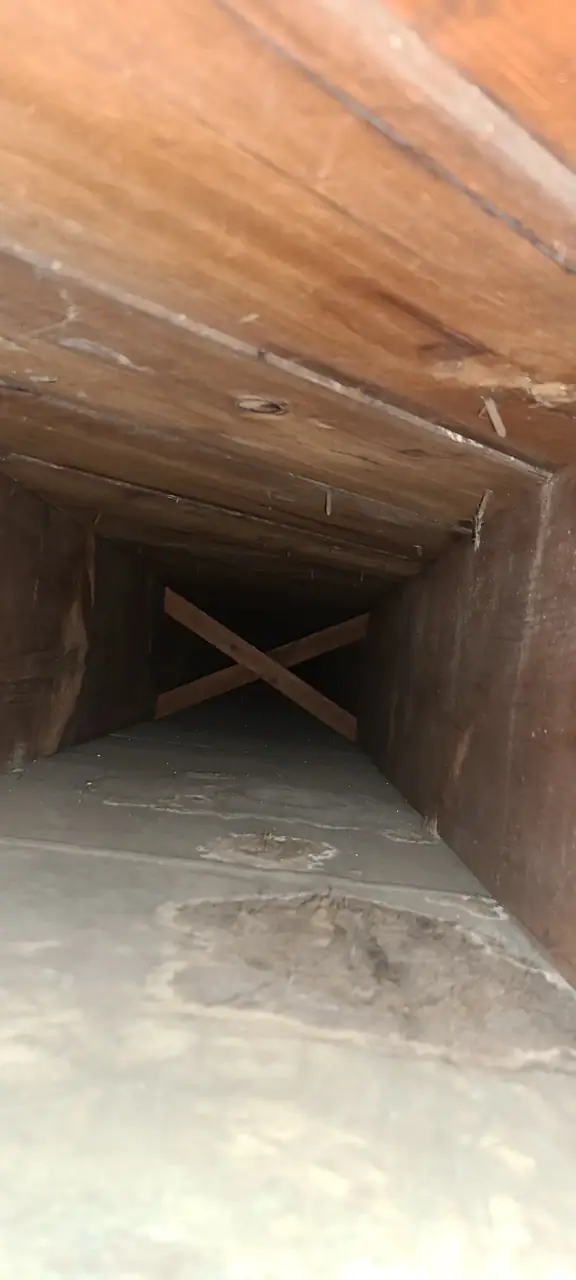
Inside a wood-framed duct cavity during an air duct cleaning
Whip and brush agitation into an eight inch trunk line
An eight inch hose connects the negative air machine to the trunk line, which is what lets the whole system pull rather than just the one register being worked on. From there, whips and brushes run through the branch lines to physically knock loose the dust, pet hair and debris packed onto the interior walls of the ductwork.
Agitation matters because dust does not just sit loose inside a duct. It bonds to the metal or flex liner over years of the system running, and pulling air through a dirty system without disturbing that layer first barely changes what comes out the other end.
Chapter 03
Dryer vents are a fire job, not a dust job
A dryer vent packed with lint is not a housekeeping issue. Lint is fuel, and a restricted vent forces the heating element to run hotter and longer to finish a load, which is exactly the condition behind thousands of home dryer fires every year. Cleaning a dryer vent is fire prevention wearing a cleaning job's clothes.
A vent that has never been cleaned, runs an unusually long or bent path to the outside, or serves a dryer that has started taking two cycles to dry a normal load, is already restricted. None of that is a maintenance nice to have at that point.
Every three to five years, and what actually resets that clock
Most residential duct systems hold up fine on a three to five year cleaning interval. That number is not fixed. A renovation with drywall dust or insulation debris moving through the return air, a move into a home with no known cleaning history, or a new pet shedding into the system, all reset the clock sooner than the calendar would suggest.
Sanitization and deodorization are available as an add-on once the physical cleaning is done, for a system that has had smoke, mold odor or heavy pet dander sitting in it. They come after the debris is removed, never in place of removing it.
Kevin Guanzini's house in Rochester is 125 years old, and he did not think the ducts had ever been cleaned before we got there. He called it the best in town afterward, on Google.
Standards and add-ons
NADCA guidelines, and what we add when it is asked for
Every job runs the same HEPA-filtered air duct cleaning system described above, paired with:
- Cleaning follows National Air Duct Cleaners Association guidelines.
- Optional sanitization and deodorization, run after the physical cleaning, for smoke, mold or pet odor already sitting in the system.
- Dryer air duct cleaning as its own line item, separate from the house system.