Cleaning
Carpet cleaning
Hot water extraction with a citrus pre-spray and a soft water rinse, done the way a technician does it when the carpet is going back under a family's feet the same day.
Chapter 01
Hot water extraction beats bonnet on a soiled pile
Bonnet cleaning spins a pad across the top of the fiber and picks up whatever is sitting right at the surface. It looks clean fast, which is exactly the problem: the soil that was two or three millimetres down never got disturbed, and it works its way back to the top within a couple of weeks.
Hot water extraction forces heated water and cleaning solution down into the pile under pressure, then pulls it straight back out with the same pass. That is the difference between moving soil around and actually removing it. On a carpet that has gone a year or two between cleanings, it is the only method that gets to the bottom of the pile rather than the top of it.
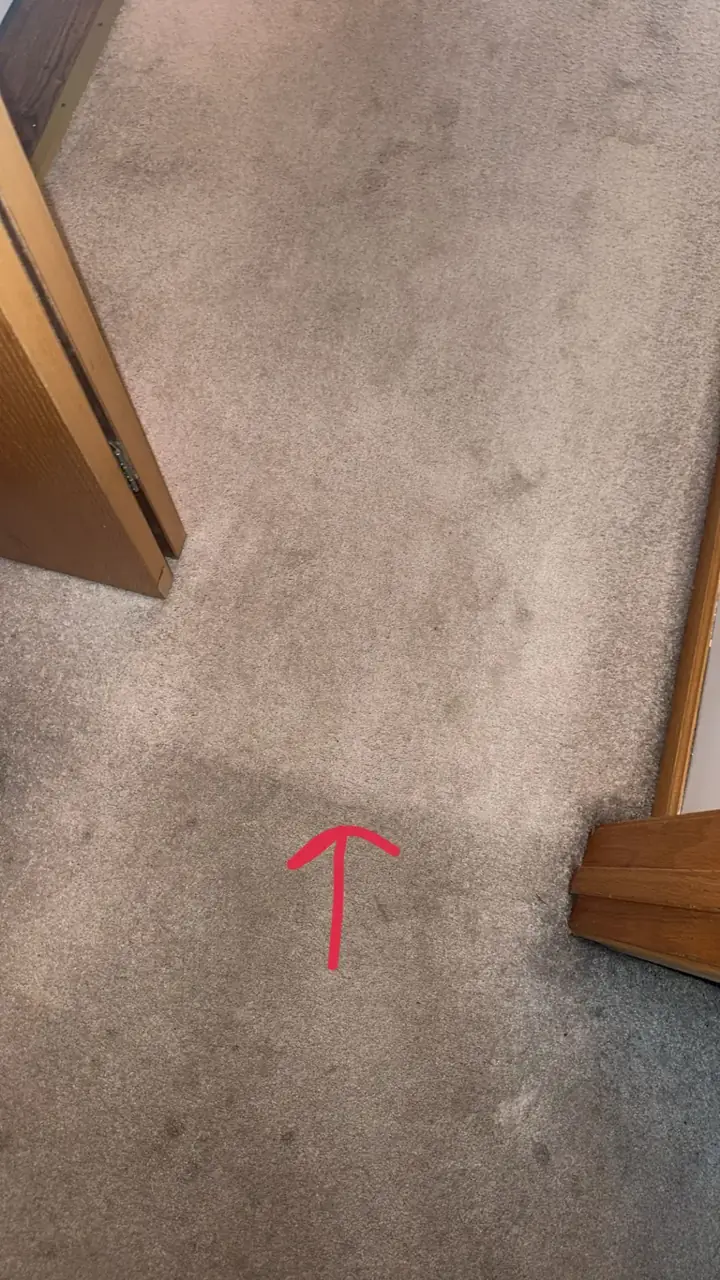
A residential carpet stain marked with a red arrow ahead of a hot water extraction pass
The citrus pre-spray, the soft water rinse, and why hardness changes dry time
Before any hot water goes down, a citrus-based pre-spray goes on first and sits long enough to break the bond between soil and fiber. That is what actually loosens ground-in traffic patterns and old spot stains rather than just wetting them.
The rinse pass after that uses soft water on purpose. Hard water leaves mineral residue behind in the pile as it dries, and that residue attracts new soil faster, which is the classic complaint of a carpet that seems to get dirty again within a month of cleaning. Soft water rinses clean and dries clean, and it dries in a more predictable window because there is nothing left behind to hold moisture in the fiber.
Chapter 03
Pet stains are a subfloor problem, not a fiber problem
A pet stain that keeps coming back after cleaning almost never means the fiber was cleaned badly. It means urine soaked through the carpet and pad and reached the subfloor, where it stays and continues to wick back up through capillary action every time the carpet gets damp or humid.
Treating that stain as a surface job wastes a visit. It has to be treated as what it is: pad removal where the saturation is bad enough, subfloor treatment to neutralise what soaked through, and only then a fresh pass on the fiber itself. Skipping the subfloor step is why some previous cleanings never held.
Scotchgard as aftercare, and what it does not do
Scotchgard Protector goes on after the carpet is clean and dry, as a fiber coating that gives spills more time to be blotted up before they set into a stain. It is genuinely useful for exactly that: buying time on a fresh spill.
It is not a substitute for cleaning, and it does not stop soil from working into the pile over normal foot traffic. Think of it as extending the life of the clean you already paid for, not as a reason to stretch out the next cleaning.
Billy is named twice in our reviews for carpet work, once for a house going up for showing with cat hair and set stains cleaned out ahead of the deadline.
Method and aftercare
What the process is actually called
- Hot Water Extraction
- The industry name for the two-step pass described above: heated water and solution forced down into the pile under pressure, then pulled straight back out in the same motion, rather than left to dry in the carpet.
- Scotchgard® Protector
- The fiber coating applied after cleaning and drying, so a fresh spill beads up and blots away instead of setting into the pile while you reach for a towel.
Current offers
Two carpet specials, running now
- $10 off: Carpet cleaning, three room special. Three rooms and one hallway.
- $20 off: Carpet cleaning, house special. Two rooms, two bedrooms and one hallway.