The bench
Oriental and area rug cleaning
A hand-woven or heirloom rug does not go through a machine. It comes off the floor and onto the bench for a 17-step process, named and followed the same way every time.
Chapter 01
Seventeen steps, named end to end
Rug cleaning is not carpet cleaning scaled down. It is a bench process with a fixed sequence, and skipping or reordering a step is how a rug comes back with dye that has bled or a fringe that has felted. This is the sequence, run the same way on every rug that comes through the door:
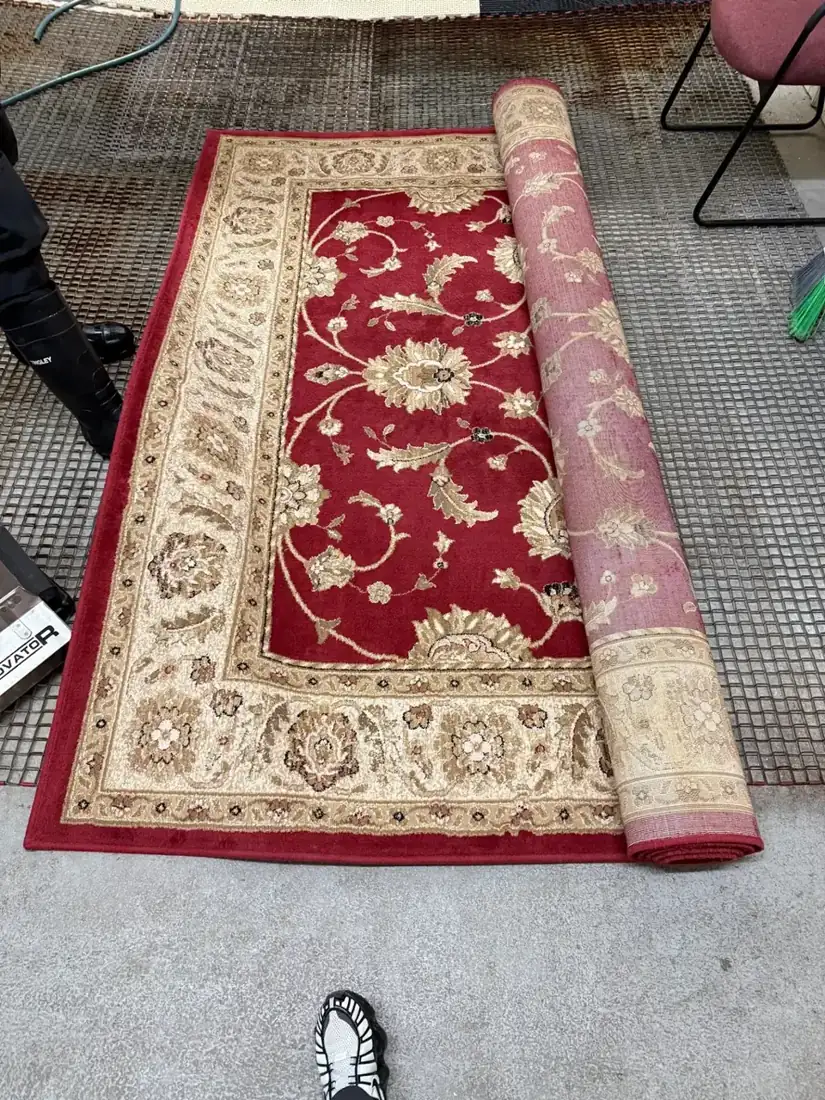
A half-unrolled oriental rug showing the dull rolled half against the cleaned, vivid half
Color-fastness and dye migration decide everything after it
Before any water touches the rug, a color-fastness test is run on a hidden section of every color in the field and border. That single test decides how the rest of the job is done: how much moisture is safe, whether a color needs to be set before washing, and whether the piece can be fully immersed or has to be handled more conservatively.
Skip that test and dye migration is the result: one color bleeding into the field around it, which cannot be undone once it has happened. Every rug that comes onto the bench gets this test first, no exceptions for how old or how confident anyone is about the dyes.
Chapter 03
Dusting is the step everyone skips, and it is where the dirt actually is
Most of the soil in a rug is not on the surface where a vacuum reaches it. It is dry particulate matter that has worked down between the knots over years of foot traffic, and it acts like sandpaper on the foundation fibres every time the rug is walked on.
Dusting uses controlled vibration to drive that embedded grit out from underneath, before pre-vacuum and before a drop of water goes on. A rug that goes straight to washing without dusting first is being washed with the abrasive soil still packed inside it, which is exactly backwards.
Fringe correction and secure rolling get the rug home in one piece
Fringe is handled twice: a pre-treatment before washing to protect it through agitation, and fringe correction afterward to straighten and even it back out, since fringe is what shows wear and mishandling first.
The rug is then rolled and secured for the trip home, not folded and not left loose, because folding creases a rug in a way that can take months to relax back out. Pickup and delivery close out the same job that started with inspection.
Textile Pro Certified since 2014, one of ten companies nationwide that year: a six-month program under rug specialist Lisa Wagner and fabric expert Jim Pemberton, completed by owner Michael Thompson and Rug Cleaning Specialist Christopher Janvrin. We are also members of ORRA.
The bench process
The full sequence, in order
- Initial inspection
- Photo documentation
- Dusting
- Pre-vacuum
- Color-fastness test
- Pre-spotting and conditioning
- Fringe pre-treatment
- Agitation
- Rinse and flush
- Forced air drying
- Fringe correction
- Grooming
- Fabric protection
- Post inspection
- Secure rolling
- Pickup and delivery
Certification
Textile Pro Certified, the whole bench trained together
Every rug on our bench goes through the same 17-step cleaning process, whether it is a small accent piece or a room-size heirloom. That process comes out of an elite textile care program led by renowned rug specialist Lisa Wagner and fabric expert Jim Pemberton, a six-month course our leadership completed in 2014. In 2014, only ten companies nationwide achieved this certified status. We were one of them.
Current offer
10% off
Rug cleaning. Hand-washed oriental and area rugs.