The First Hour After a Pipe Bursts: What to Do Before Anyone Arrives
What you do in the first sixty minutes affects how much of the damage is recoverable.
September 9, 2026 · 4 min read
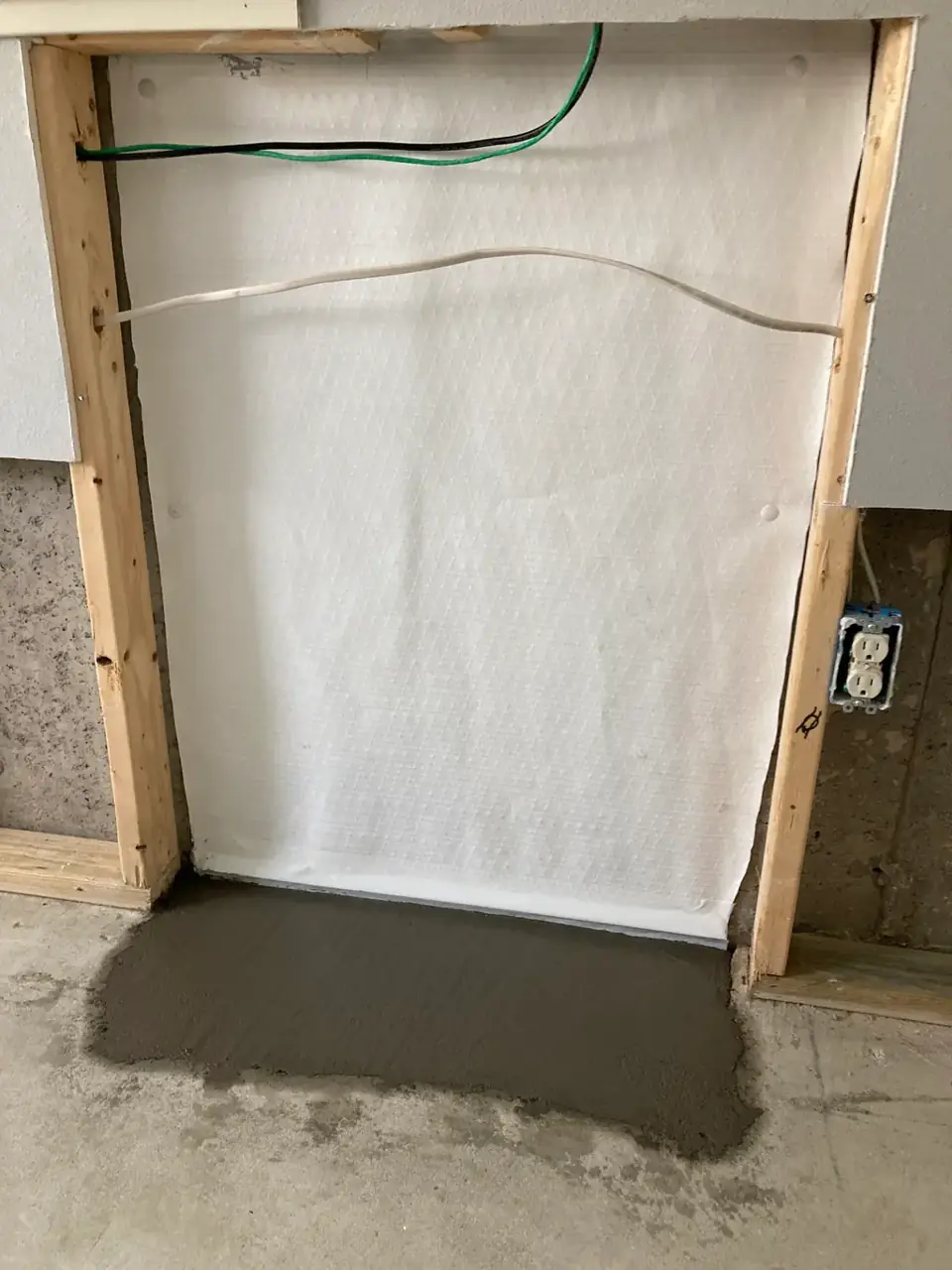
A burst pipe doesn't wait for a convenient time. It happens at 2am, during a holiday, in the basement while you're at work upstairs, or during a spring thaw when snowmelt and ground saturation are already putting pressure on old plumbing. Frozen pipes are common across a Minnesota and Wisconsin winter, and spring basement flooding is its own recurring event in this region. What you do in the first hour, before any restoration crew arrives, has a real effect on how much of the damage is recoverable versus permanent.
Step one: shut off the water
This comes before everything else. Find the main shutoff valve, usually near where the water line enters the house, in a basement, utility closet, or crawl space, and turn it off completely. If you can't locate the main shutoff or it's inaccessible, shutting off the valve closest to the burst point is the next best option. It's worth finding your main shutoff valve today, before an emergency, so you're not searching for it in the dark with water running. In an older home around Rochester or La Crosse, that valve is sometimes tucked behind decades of stored boxes or a finished basement wall, which is exactly why a five-minute walkthrough on a calm afternoon is worth doing now rather than during an actual burst.
Step two: cut the power to the affected area if there's any risk of water reaching outlets or fixtures
Water and electricity together are dangerous. If water is pooling anywhere near outlets, light fixtures, or an electrical panel, shut off power to that area at the breaker box rather than the room switch. Don't wade into standing water to reach a switch or outlet; go to the breaker panel directly if it's safe to reach.
Step three: call for emergency help
We answer 24/7/365 and get on site in 60 minutes or less, which matters because water damage compounds fast. What's a manageable extraction job in the first few hours can become a mold remediation job within 24 to 48 hours if standing water sits untreated. Call (507) 580-0580 as soon as the water is shut off, don't wait until morning or until you've finished assessing the damage yourself.
Step four: move what you can, safely
- Move furniture, rugs, boxes, and anything on the floor out of standing water or off wet carpet if you can do it without walking through deep or electrically compromised water.
- Lift items off wet flooring onto blocks, foil, or plastic if you can't move them out of the room entirely, to stop wicking damage from spreading upward into wood furniture legs.
- Pull up loose area rugs. A soaked rug left sitting on wet carpet or hardwood traps moisture underneath and accelerates damage to both.
- Remove any paper documents, photos, or electronics from the affected area first, since those are the items least likely to be recoverable once soaked.
What to leave alone
- Don't run a household vacuum on standing water. Wet-dry shop vacuums are fine for small amounts if you have one, but a regular vacuum is a shock and fire hazard on real standing water.
- Don't try to dry out drywall or flooring with space heaters pointed directly at it. That can push moisture further into the material rather than out of it, and heat without airflow can encourage mold growth in an enclosed space.
- Don't assume a small visible puddle means small actual damage. Water travels along framing, under flooring, and behind walls well beyond what's visible on the surface, which is part of why professional assessment with moisture meters and thermal imaging matters even when the visible damage looks minor.
- Don't put off calling your insurance company. Document what you can with photos before cleanup starts, since that documentation matters for the claim.
What happens once we're on site
Our process starts with emergency response and assessment, then moves to water extraction, structural drying and dehumidification with air movers and equipment sized to the space, cleaning and sanitization, and repair or reconstruction where needed, finishing with a final inspection. We work to IICRC standards throughout, and we assist directly with insurance claim documentation and adjuster coordination on every job, so you're not managing that process alone on top of everything else.
Why the assessment step isn't just a formality
Before any equipment gets set up, the affected area is checked with thermal imaging and moisture meters, which find water that's traveled into wall cavities, subfloor, and framing well beyond what's visible on the surface. That's the part homeowners can't do themselves in the first hour, and it's why the visible puddle in the middle of the room is often the smallest part of the actual damage. The extraction and drying equipment, air movers and dehumidifiers sized to the room, gets placed based on what that assessment finds, not just where the water is currently pooling. EPA-approved disinfectants are used during cleaning and sanitization to address any contamination the water may have introduced, particularly relevant with sewage backup situations, which are a different and more serious category of water event than a clean supply line break.
If a pipe bursts or you're dealing with a spring flooding situation anywhere around Rochester, La Crosse, or the surrounding towns we serve, call (507) 580-0580 any hour of any day. See our water damage restoration page for the full process, and our mold remediation page if standing water has already been sitting for a day or more.
America's Best Cleaning & Restoration Services, (507) 580-0580
Call (507) 580-0580More articles
How to Get Stains Out of Carpet, and the Three That Need a Professional
Most fresh stains respond to blotting and patience. A handful set permanently the moment you reach for the wrong bottle.
How Long Carpet Really Takes to Dry After Cleaning, and What Changes It
Dry time isn't fixed. It depends on the carpet, the season, and how the house is set up while it dries.