How Often Air Ducts Should Be Cleaned in an Old Minnesota House
Older housing stock, cold dry winters, and decades of unfiltered dust add up faster than people expect.
September 9, 2026 · 4 min read
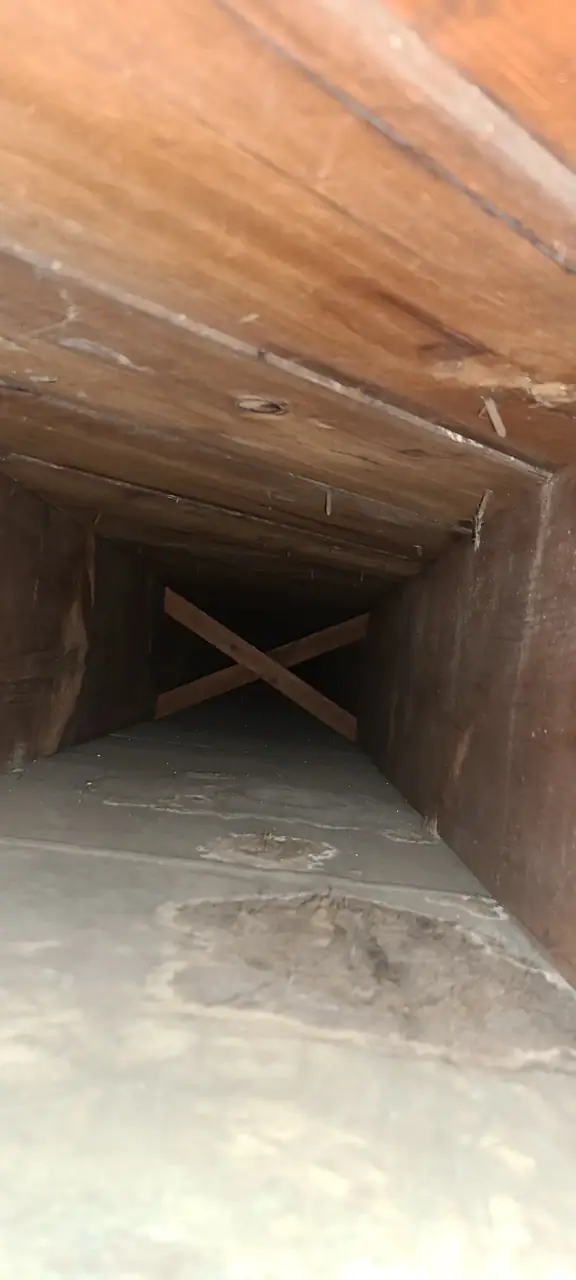
A lot of the homes we work in around Rochester, La Crosse, and the smaller towns between them were built well before anyone was thinking about duct cleaning as routine maintenance. Some of these ductwork systems have been running for 50, 75, even over 100 years with nothing more than the occasional filter change. One review that stuck with us came from a customer whose new home was 125 years old, and by his own account, the ducts had probably never been cleaned once in that entire span.
The general recommendation
As preventative maintenance, air ducts should be cleaned every 3 to 5 years in a typical home. That's the baseline. It moves in both directions depending on the house, the occupants, and what's actually accumulating inside the system.
What pushes an older home toward the shorter end
- Age of the ductwork itself: older duct systems, especially ones original to a pre-war home, often have more seams, joints, and rougher interior surfaces where dust and debris catch and build up compared to newer sealed sheet metal or flex duct.
- Renovation history: any home that's been remodeled has probably had drywall dust, sawdust, or insulation particles pulled into the return air at some point, even with plastic sheeting up. That settles into ductwork and doesn't clear itself out on its own.
- Pets: shedding fur and dander get pulled into the return air and build up on interior duct surfaces over time, and it compounds faster in a multi-pet household.
- Never-cleaned systems: if nobody can remember the last time it happened, or it's genuinely never happened, that's not a 3 to 5 year problem anymore, that's a call-now problem, particularly with the older housing stock common in this part of Minnesota and Wisconsin.
- Allergy or respiratory sensitivity in the household: if anyone in the home has asthma or allergies, tighter intervals are worth considering since dust and allergens cycling through the ductwork affect indoor air quality directly.
What a first cleaning in a never-touched system looks like
When a homeowner calls about a system that's genuinely never been cleaned, the first visit is usually more involved than a routine 3 to 5 year maintenance pass. Decades of undisturbed buildup don't come loose in a single light pass, so the technician spends more time working the whip and brush tools through each branch line, checking return air ducts as thoroughly as supply lines, and confirming the negative-air system is pulling everything through HEPA filtration rather than letting anything settle back into the living space partway through. It's also the point where any structural issues in the ductwork itself, a disconnected joint, a section crushed during some past renovation, tend to get spotted, since nobody's had eyes inside that system in a very long time.
Signs it's overdue, regardless of the calendar
- Visible dust blowing out of vents when the system kicks on, or dust that resettles on furniture unusually fast after cleaning.
- A musty or stale smell when the furnace or air conditioning first turns on.
- Noticeably worse allergy symptoms indoors than you'd expect, especially right after the heat comes on for the season.
- You've just moved into an older home and have no records of prior service, or the home's history (like that 125-year-old house) makes it likely it's never been done.
- Recent renovation work in the home, even with precautions taken.
What the cleaning actually involves
We use a trailer-mounted HEPA-filtered negative-air-pressure system connected through an 8-inch hose run to the home's trunk lines. That negative pressure pulls air and dislodged debris out of the ductwork and through HEPA filtration rather than blowing it around the house, which matters in an older home where you don't want decades of settled dust getting stirred loose into the living space instead of removed from it. Whip and brush agitation tools work through the branch lines to knock loose what's built up on the interior surfaces, and sanitization or deodorization is available as an add-on where it's warranted, along with dryer vent cleaning, which is worth doing at the same visit since dryer vents carry their own separate fire-risk concern from lint buildup.
Standards behind the process
Duct cleaning as an industry has a real body of standards behind it, set by the National Air Duct Cleaners Association, and we work to those standards rather than an informal approach put together on the fly. That matters most in older homes, where a system with more seams and joints gives you more places for a rushed job to miss. Negative pressure applied at the source, agitation through the full run of branch lines rather than just what's reachable from the main trunk, and HEPA filtration on the exhaust end are all part of doing it to that standard rather than just doing it fast.
Why cold Minnesota winters make this matter more here
Homes in this region run heating systems hard for months at a stretch, and a lot of older construction wasn't built with the tight envelope of newer homes, so the furnace is cycling air through the ductwork constantly during a long heating season. Whatever's sitting in that ductwork gets circulated through the house repeatedly over a Minnesota winter in a way that a milder climate wouldn't push nearly as hard.
If it's been a while, or you're not sure it's ever happened, it's worth a look before the next heating season really gets going. We serve Rochester, La Crosse, and the surrounding towns with the same trailer-mounted system on every job. Call (507) 580-0580, or see our air duct and dryer vent cleaning page for the full detail, including current offers on our coupons page.
America's Best Cleaning & Restoration Services, (507) 580-0580
Call (507) 580-0580More articles
How to Get Stains Out of Carpet, and the Three That Need a Professional
Most fresh stains respond to blotting and patience. A handful set permanently the moment you reach for the wrong bottle.
How Long Carpet Really Takes to Dry After Cleaning, and What Changes It
Dry time isn't fixed. It depends on the carpet, the season, and how the house is set up while it dries.