What a 17-Step Rug Wash Actually Involves, Step by Step
Rug washing isn't carpet cleaning scaled down. It's a different process entirely, built around textiles that can't be treated the way carpet is.
September 9, 2026 · 4 min read
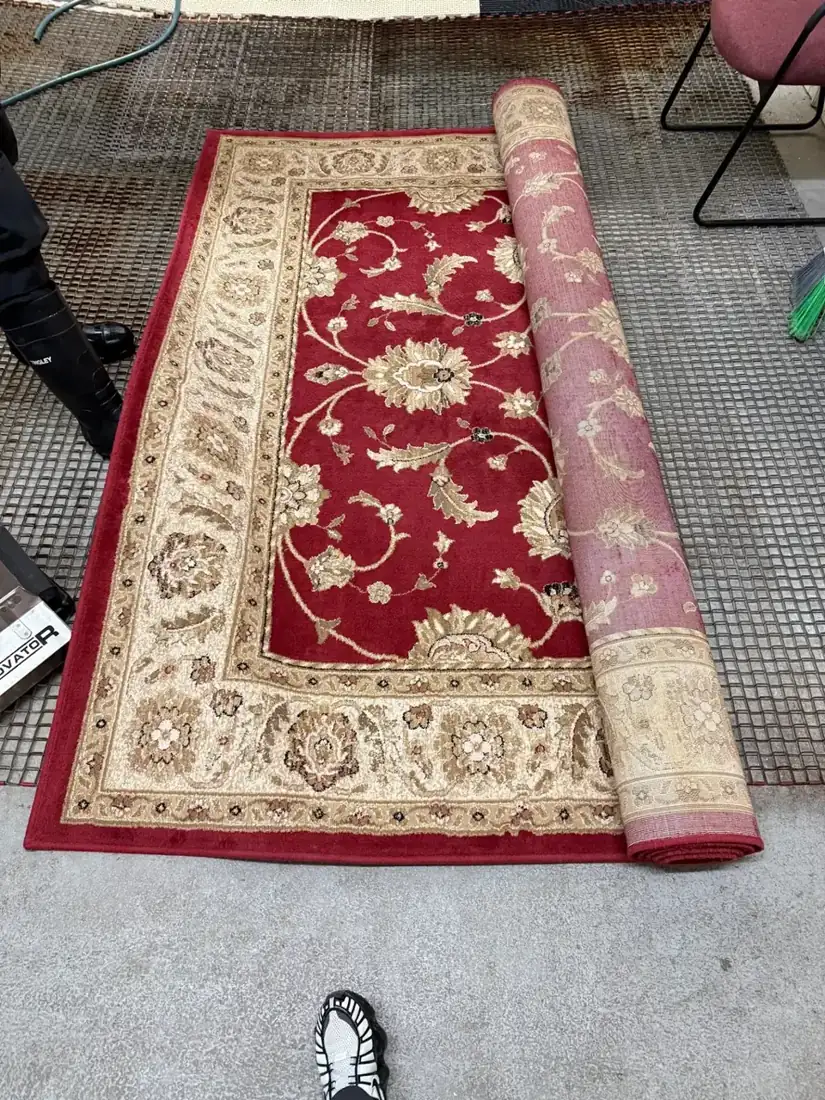
A lot of people assume a rug is just a smaller version of a carpet, and that cleaning one is the same job on a smaller scale. It isn't. Hand-woven oriental and heirloom rugs are built from different materials, dyed differently, and constructed differently than wall-to-wall carpet, and treating one like the other is how rugs get damaged rather than cleaned. Dropping a rug off at a general cleaner, or worse, running it through the same equipment used on fitted carpet, skips steps that exist specifically because rugs move, flex, and dry differently than something tacked to a floor. Our rug process is a 17-step method built specifically around that difference, and it's the reason we became Textile Pro Certified in 2014, one of only ten companies nationwide that year to complete the six-month program under Lisa Wagner and Jim Pemberton.
Before any water touches the rug
- Initial inspection: the rug is examined for existing damage, wear patterns, fringe condition, and any areas that need special attention before cleaning starts.
- Photo documentation: photos are taken to record the rug's condition going in, which matters for both our records and yours, especially on an heirloom piece.
- Dusting: this is a step most people skip entirely at home, and it's one of the most important ones. Dry soil that isn't removed before wet cleaning turns to mud inside the fibers instead of coming out.
- Pre-vacuum: a more thorough vacuum pass follows dusting to lift remaining loose particulates before any liquid is introduced.
- Color-fastness test: dyes in older or hand-woven rugs can run or bleed under the wrong conditions. This test is done on every rug before full cleaning to confirm what the dyes can safely tolerate.
The wash itself
- Pre-spotting and conditioning: visible stains and problem areas get targeted treatment before the general wash, and the fibers are conditioned to prepare them for cleaning.
- Fringe pre-treatment: fringe is fragile and handled separately from the body of the rug, since it's usually the first thing to show wear or discoloration.
- Agitation: controlled agitation works cleaning solution through the pile to lift embedded soil, at a level calibrated to the rug's specific fiber and construction.
- Rinse and flush: a full rinse flushes out the cleaning solution along with the soil it lifted, rather than leaving residue in the fibers that would attract dirt again quickly.
- Forced air drying: controlled airflow dries the rug evenly, which matters for preventing uneven shrinkage or fiber distortion that can happen with slow or uneven drying.
Finishing and return
- Fringe correction: fringe is straightened and corrected after drying, since it's easy for fringe to end up tangled or uneven through the wash and dry process.
- Grooming: the pile is groomed to restore its natural lay and texture, the difference between a rug that looks washed and one that looks cared for.
- Fabric protection: a protective treatment can be applied at this stage to help the rug resist future staining, similar in principle to Scotchgard treatment on carpet.
- Post inspection: a final check confirms the rug meets the standard before it goes anywhere near your home again.
- Secure rolling: the rug is rolled carefully for transport, protecting the fibers and fringe from damage in handling.
- Pickup and delivery: rugs are picked up and delivered back, so the process doesn't require you to transport a large, heavy, freshly cleaned rug yourself.
Why the process matters more on hand-woven and heirloom pieces
A modern machine-made area rug can tolerate more than an older hand-woven oriental rug can. Hand-knotted construction, natural fiber dyes, and decades of age all change how a rug responds to water, agitation, and drying. Skipping steps like the color-fastness test or dusting isn't a shortcut that saves time, it's how rugs end up with bled dye, distorted fringe, or fiber damage that can't be undone. The full process exists because we've seen what happens when any one of these steps gets skipped, which is exactly what the Textile Pro program spends six months training on.
What this process handles
Hand-woven oriental and heirloom rugs, modern area rugs, pet odor and stain treatment specific to rug fibers, fringe correction, and protective treatments all go through this same 17-step foundation, adjusted for the specific rug in front of us. Pet accidents on rugs need particular care, since the same enzyme-based approach used on carpet pad has to be adapted to the rug's backing and fiber type rather than applied the same way.
The Textile Pro certification behind it
Textile Pro Certification is a six-month program, and completing it in 2014 put us among just ten companies nationwide that year to do so, trained directly under Lisa Wagner and Jim Pemberton. It goes well beyond a weekend course. The color-fastness testing, the fiber-specific agitation levels, and the fringe handling in this 17-step process all trace back to that training rather than a generic rug-cleaning checklist. Owner Michael Thompson and rug specialist Christopher Janvrin have both carried that training forward into how every rug that comes through the shop gets handled, whether it's a modern area rug from a big-box store or a hand-knotted piece that's been in a family for three generations.
If you have a rug that hasn't been professionally cleaned in a while, or an heirloom piece you're nervous about trusting to anyone, this is the process it goes through here. We serve Rochester, La Crosse, and the surrounding towns, with pickup and delivery included. Call (507) 580-0580, see our oriental rug spa page for more detail, or check current rug cleaning offers on our coupons page.
America's Best Cleaning & Restoration Services, (507) 580-0580
Call (507) 580-0580More articles
How to Get Stains Out of Carpet, and the Three That Need a Professional
Most fresh stains respond to blotting and patience. A handful set permanently the moment you reach for the wrong bottle.
How Long Carpet Really Takes to Dry After Cleaning, and What Changes It
Dry time isn't fixed. It depends on the carpet, the season, and how the house is set up while it dries.